

Marketing operations is the machinery behind marketing: how ideas become content, how content reaches the right channels, how interest becomes a conversation with sales, and how anyone knows which of it worked. When the machinery is missing, every campaign is rebuilt by hand, every report is argued over, and good leads arrive in sales with no context.
Agents make the machinery cheaper to run and easier to break. They can research, draft, adapt and distribute faster than any team, which is exactly why the point of view, the claims and the approval rules have to be set by people first — and why one source, not ten drifting copies, has to sit at the centre.
Questions this topic answers
- How do we turn one piece of expertise into content for every channel we use, without ten versions drifting apart?
- What can agents draft and distribute, and what needs a person's approval first?
- Which content leads to qualified conversations, not just visits?
- How does a lead reach sales with its context intact?
- Should we publish more, or improve what we already have?

Start here
- What happens when one knowledge asset is distributed across ten channels — Hermes on one source with an owner, what may change per channel and what never may.
- Why your website should not be treated as a finished project — running the site as a product with an owner, a rhythm and measures.
- Designing for AI Answer Engines — evidence, entity clarity and content structures that search engines and answer engines can use.
- Why a good intake system changes the quality of every downstream workflow — what a good intake record holds, so that every enquiry reaches its owner with the context it needs.
The discovery side of the operation has its own topics: SEO and AIO / GEO. For measurement, see Analytics.
Key ideas
- One asset, many channels — invest in one substantial piece and adapt it for each channel, every version pointing back to the source.
- Experts set the point of view — agents research, structure, draft, distribute and measure; the perspective comes from people who have done the work.
- Editorial guardrails — topics, claims, sources and approval rules written down before anything is drafted, for people and agents alike.
- A workflow, not heroics — idea, draft, review, approval, publication, distribution and update follow the same path every time, with an owner at each step.
- Corrections travel — when the source changes, every copy changes with it.
- The handoff carries context — a lead reaches sales with what the person read, asked and needs.
- Attribution to opportunity — measure which content leads to qualified conversations and revenue, not only to visits.
- Compound before you produce — update, interlink and redistribute what already works before making more.

Who knows this topic
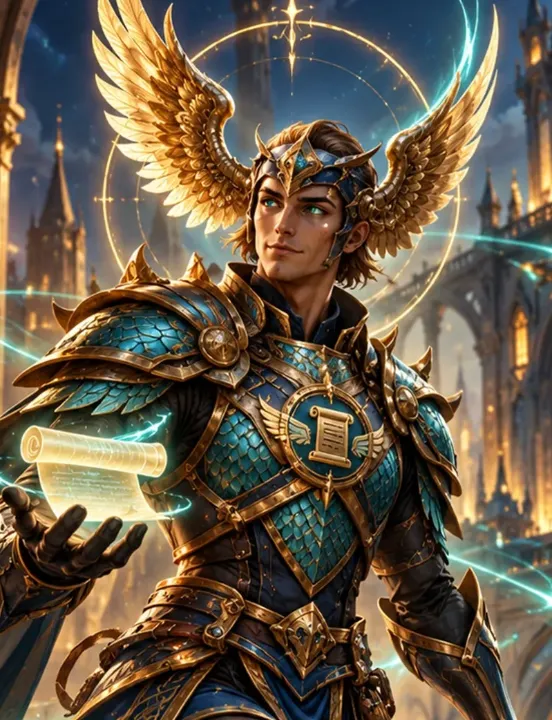
- Hermes — the Guild's communications and content agent: researches, structures, drafts, distributes and measures, inside editorial guardrails set by human experts.
- Oracle — discovery and measurement.
- Athena — strategy and journey: directs every path towards a useful next step.
- Hephaestus — web engineering.
Hermes's human checkpoint is the Experience Wizard. The Communications Wizard role leads digital presence strategy and the Guild's voice across channels.
Where this knowledge is put to work
Content & AI search visibility builds the system end to end — technical foundation, authority map, expert playbooks, citation signals, a distribution engine and visibility analytics — in four steps: audit, map, publish, compound. Digital Presence brings strategy, content, design, engineering and analytics together, so that the experience and the acquisition system reinforce each other.

Publishing a lot and hearing little back? Fix the workflow and the measure before the next campaign.